
At ISVR Consulting we carry out acoustic and vibration measurements and qualification tests to international, British, proprietary and other standards.

As well as working in our specialist labs and acoustic chambers, we can conduct tests in the field or at your premises.If you’re not sure what tests you need, or if you would like help to interpret a particular standard, please contact us. Our consultants will be happy to discuss your requirements and offer advice.

We can also work with you to devise test procedures that meet your needs if none currently exist.
Our services include:

Noise standards testing

Product acoustic standards testing and sound power testing

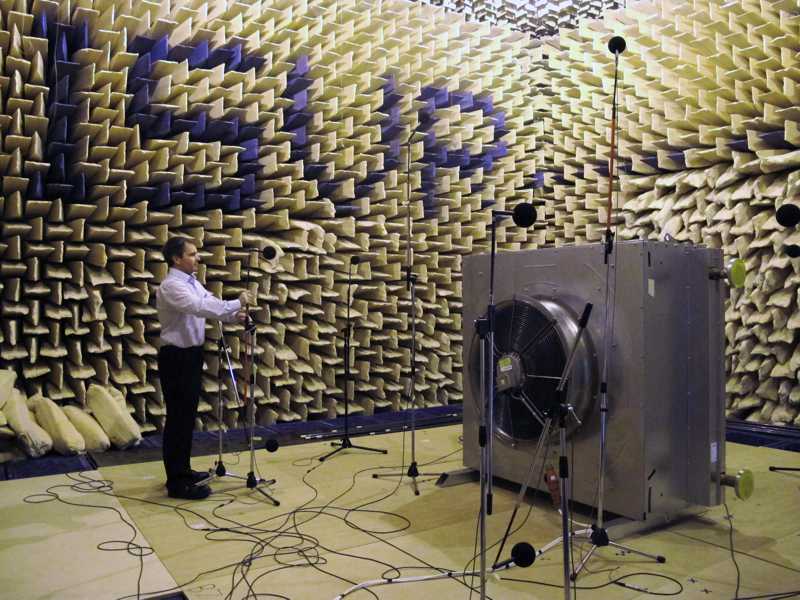
Our experts can provide accurate sound power determination for your product’s regulatory compliance and market acceptance. We test to key standards such as ISO 3744, ISO 7779, and BS EN 60704-2, providing robust sound pressure level and sound intensity methodologies for measuring acoustic emissions across a wide range of products. Whether you’re aiming for CE marking, seeking to demonstrate your commitment to product quality and safety, or to reduce the risk of non-compliance issues, we can help.

Defence, military and emergency services standards testing

For defence and military contractors, rigorous high-intensity fatigue testing is a critical component in qualifying equipment for operational deployment. We can test your component’s compliance against stringent military and defence acoustic standard requirements, such as MIL-STD-810, DEF STAN 08-123, and MIL-STD-740, giving you the evidence of compliance you need.

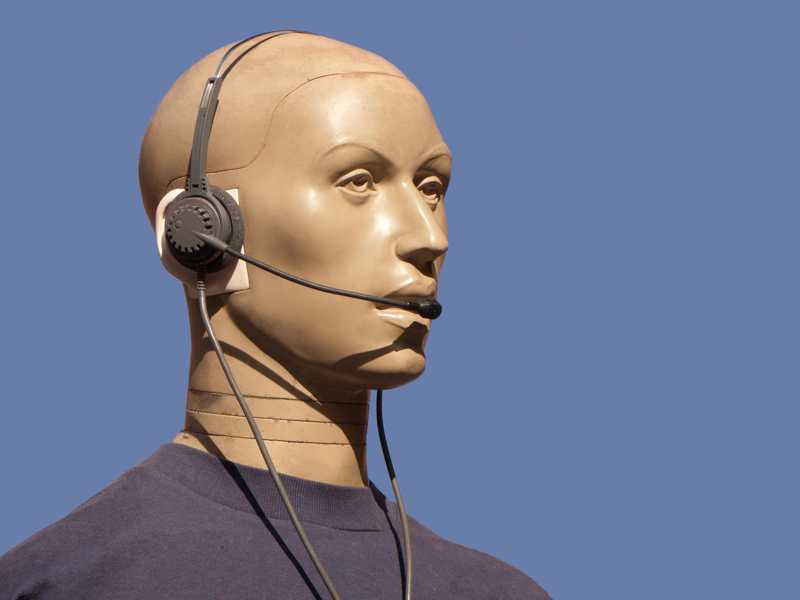
In addition, we are experienced in testing to occupational noise standards for defence and emergency services, including headset and hearing protection testing (see below).

Acoustic standards testing

Audio, headset and hearing protection standards testing

With specialist expertise and bespoke equipment for precision testing in the field as well as the lab, we can help you meet acoustic standards for audio products, or ensure communications or hearing protection equipment comply with regulations.

We have the facilities to carry out qualitative and quantitative measurements on microphones, loudspeakers and audio equipment, for example EN 50332 for sound levels from portable audio devices. We can also measure noise exposure from radio earpieces and communications headsets.

Our insertion loss testing measures the noise reduction levels of protective equipment such as ear defenders and flight helmets (ANSI/ASA S12.42-2010). We also test to defence standards such as DEF STAN 00-27 relating to noise from weapons and explosives, and selection of hearing protection.

Material and element standards testing

Our specialist acoustics consultants can help you optimise building or product sound insulation, with expert sound absorption and transmission loss testing services. For example, we use our reverberation chambers for airborne sound insulation testing in line with ISO 10140, and sound absorption in line with ISO 354.

Partner with us to confidently demonstrate that your products or materials meet regulatory requirements and deliver superior acoustic performance in real-world environments.

Building design and building regulation standards testing

We can help you meet the acoustic requirements set out in standards such as Part E of the Building Regulations, Building Bulletin 93 (BB93) for schools BREEAM acoustics requirements.

Vibration standards testing

Vehicle and seat vibration standards testing

With a dedicated vibration test lab we can offer specialised vehicle and seat vibration standards testing services to ensure regulatory compliance with standards such as BS ISO 10326-1 for any kind of vehicle seat, BS ISO 10326-2:2022 for train seat vibration, and BS EN ISO 7096 for earth-moving machinery seat vibration.

 Vibration and acoustic standards we work to

We are experienced in testing against numerous vibration and acoustic standards, including those listed below. If you can’t see the standard you are interested in, or you’re not sure what test you need, get in touch. 

Sound power standards 

  • BS EN ISO 3741 Determination of sound power levels and sound energy levels of noise sources using sound pressure. Precision methods for reverberation test room
  • BS EN ISO 3743-1 Determination of sound power levels and sound energy levels of noise sources using sound pressure. Engineering methods for small movable sources in reverberant fields. Comparison method for a hard-walled test room
  • BS EN ISO 3743-2 Determination of sound power levels of noise sources using sound pressure. Engineering methods for small, movable sources in reverberant fields. Methods for special reverberation test rooms
  • BS EN ISO 3744  Determination of sound power levels and sound energy levels of noise sources using sound pressure. Engineering methods for an essentially free field over a reflecting plane
  • BS EN ISO 3745:2012+A1:2017 Acoustics. Determination of sound power levels and sound energy levels of noise sources using sound pressure. Precision methods for anechoic rooms and hemi-anechoic rooms
  • BS EN ISO 7779  Measurement of airborne noise emitted by information technology and telecommunications equipment
  • BS EN 60704-2 Household and similar electrical appliances. Test code for the determination of airborne acoustical noise
  • ETSI EN 300 753 Equipment engineering (EE); Acoustic noise emitted by telecommunications equipment ECMA-74

Defence/military acoustic and vibration standards  

  • ISO 2671 Environmental tests for aircraft equipment – Part 3.4: Acoustic vibration
  • MIL STD 810 Department of Defense test method – environmental engineering consideration and laboratory tests – Test 515.3, Test 515.4, Test 515.5, Test 515.6, Test 515.7, Test 515.8, acoustic noise
  • MIL STD 740-1 Airborne sound measurements and acceptance criteria of shipboard equipment
  • MIL STD 740-2 Structureborne vibratory acceleration measurements and acceptance criteria of shipboard equipment
  • DEF STAN 00-35 Environmental handbook for defence material – Environmental test methods – Chapter 2.08 – Test M8 acoustic noise
  • DEF STAN 02-813 Requirements for structure borne vibration and airborne noise testing of warship equipment
  • DEF STAN 08-123 Requirements for the design and testing of equipment to meet environmental conditions, Data sheet 24 – Vibration (self generated), Data sheet 26 – Acoustic noise
  • DEF STAN 00-027 (Renumbered from DEF STAN 00-27)  The measurement of impulse noise from military weapons, explosives and pyrotechnics; and selection of hearing protection

Automotive and rail acoustic and vibration standards

  • BS EN ISO 10326-1:2016 Mechanical vibration — Laboratory method for evaluating vehicle seat vibration.  Part 1: Basic requirements (Applies to any type of seat used in vehicles and mobile off-road machinery)
  • BS ISO 10326-2:2022 Mechanical vibration — Laboratory method for evaluating vehicle seat vibration. Part 2: Application to railway vehicles  (This covers seats designed for passengers or crew)
  • BS EN ISO 7096:2020 Earth-moving machinery — Laboratory evaluation of operator seat vibration
  • BS ISO 5007:2003 Agricultural wheeled tractors — Operator’s seat — Laboratory measurement of transmitted vibration
  • BS EN 13490:2001+A1 Mechanical vibration — Industrial trucks — Laboratory evaluation and specification of operator seat vibration
  • BS EN 50125-3:2003 Railway applications. Environmental conditions for equipment — Equipment for signalling and telecommunications

Building and built environment acoustic standards

  • BS EN 1793-1 Road traffic noise reducing devices. Test method for determining the acoustic performance. Intrinsic characteristics of sound absorption under diffuse sound field conditions 
  • BS EN 1793-2 Road traffic noise reducing devices. Test method for determining the acoustic performance. Intrinsic characteristics of airborne sound insulation under diffuse sound field conditions 
  • BS ISO 23351-1 Measurement of speech level reduction of furniture ensembles and enclosures. Laboratory method 
  • BS EN ISO 11546 Determination of sound insulation performances of enclosures. Measurements under laboratory conditions (for declaration purposes)