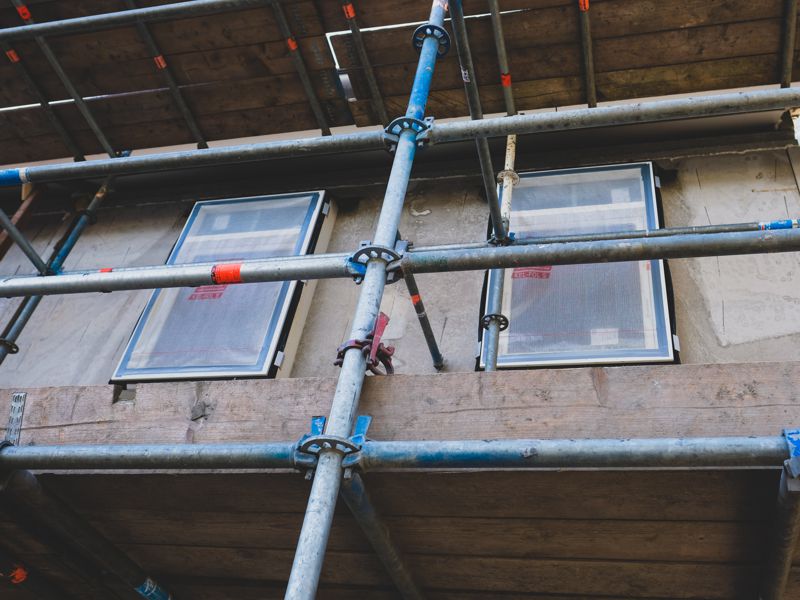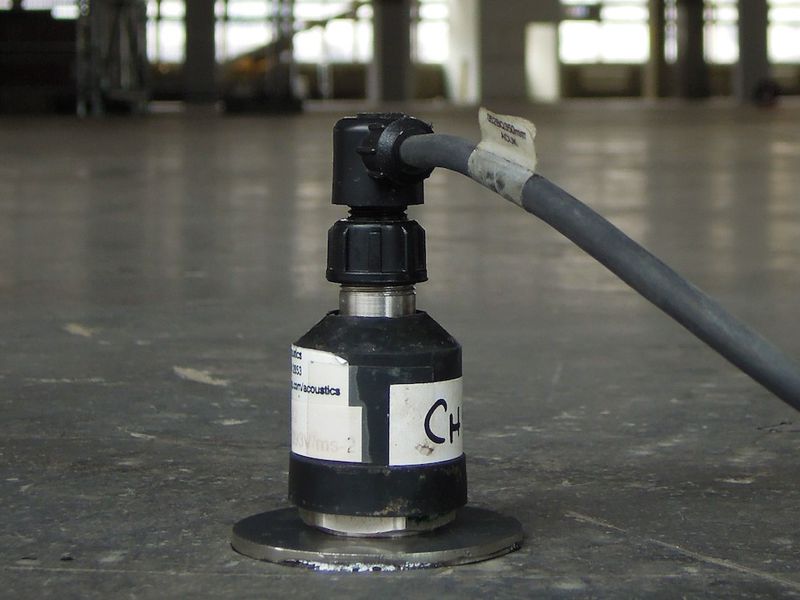

Our consultants bring specialist expertise and a wealth of experience to your building vibration and acoustics project. We can build a bespoke package to meet your requirements, from vibration analysis using advanced modelling techniques at design stage, through to vibration testing services and monitoring during construction, pre-handover and post-handover stages (RIBA Stages 1 to 7).

Our comprehensive building vibration services

Whether you need to design with ultra-low vibration standards in mind, understand and mitigate environmental vibration or avoid aeroacoustic issues with architectural building features, our building vibration consultants can help. Our services include:

  • Vibration testing and monitoring
  • Low-vibration design for sensitive facilities
  • Building vibration isolation and mitigation
  • Advanced vibration analysis and modelling

Solving vibration challenges for sensitive environments

We use modelling, vibration testing and monitoring to help architects and contractors meet stringent ultra-low vibration requirements for specialist buildings. Our track record of success notably includes two world-class physics facilities: the Beecroft Building at the University of Oxford and the Ray Dolby Centre at the University of Cambridge. 

Vibration control for SEM, STM, and nanofabrication labs

We provide solutions for diagnostic and healthcare facilities that use high-precision magnifying and imaging equipment such as SEM and STM. We can also ensure nanofabrication facilities and research centres, working at the atomic and sub-atomic scales, are fit for purpose in terms of building vibration control.  

Designing to VC and NIST vibration criteria

A number of Vibration Criteria (VC) or National Institute of Standards and Technology (NIST) curves have been devised over the years for acceptable building vibration levels in different environments. 

As well as advising on low-vibration designs, we have the specialist equipment and expertise to measure exceptionally low levels of vibration, for example to monitor and assess vibration at key construction phases. 

Our experts also use Finite Element (FE) modelling to predict vibration levels in such sensitive environments and assess the effect of equipment such as generators, cooling towers, chillers, combined heat and power units (CHPs), compressors operating in the vicinity, nearby road and rail traffic, and even footfall inside the building. 

Building acoustics – design for low noise and acoustic comfort

Our noise prediction, measurement and characterisation can support your building design or help you to identify and resolve noise issues. For example, we can:  

  • Support building design for low noise and acoustic comfort, including predicting interior acoustics for speech intelligibility, privacy and accessibility 
  • Assess acceptable levels of infrasound (or ultra-low) sound in laboratory spaces and specialist facilities
  • Undertake lab testing of building materials, for example to test acoustic absorption levels or transmission loss 
  • Predict or advise on remediation for noise from architectural building features (for example wind noise from railings)
  • Predict, measure and analyse noise from building plant/services, or noise from external sources such as nearby road and transport
  • Predict, assess and mitigate groundborne noise from railways using specialised software 

Our access to specialist facilities means we can offer bespoke studies, such as using our wind tunnel facilities to predict noise from wind whistling through building components.
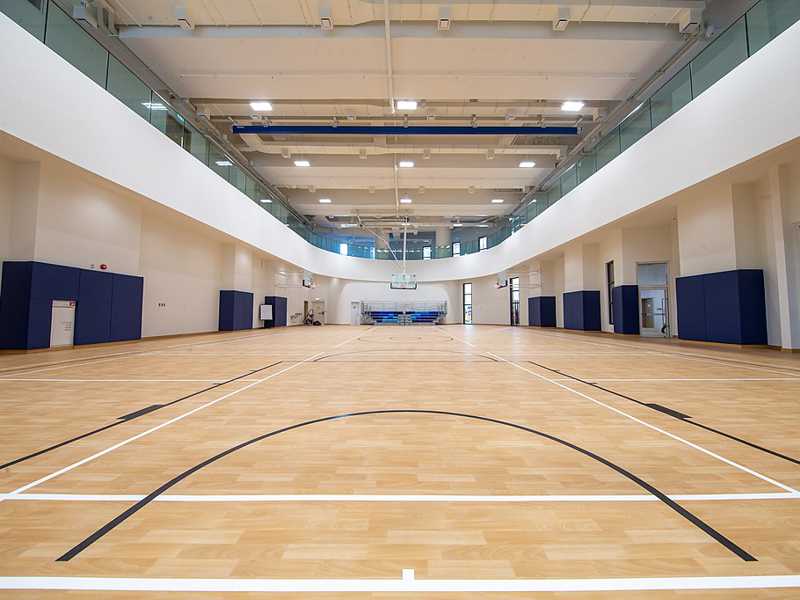
Managing infrastructure and construction vibration

No building project happens in isolation. We can help you factor in vibration from external sources such as transport and ongoing construction at the planning stage of your project, as well as providing ongoing vibration testing and monitoring. 

Solutions for buildings near railway and underground lines

By measuring and assessing noise and vibration from railways, metros, road traffic and nearby construction, we provide insights and advice for prevention or mitigation measures. 

Our consultants are experienced in working with industry professionals including architects, engineers, contractors and environmental health officers. 

Noise and vibration monitoring 

Construction noise and vibration monitoring is the  systematic measurement, and assessment of noise levels and ground‑borne vibration produced by construction activities, such as piling, demolition, blasting and heavy machinery. 

Our building vibration experts can assess compliance with BS 7385 and BS 5228 guidance to ensure that levels are not exceeded during the various construction phases. These types of assessment are used to ensure that works comply with legal limits, protect nearby buildings and infrastructure, and minimise disturbance to people who live or work close to the site.

Ensuring compliance with BS 6472 for human exposure

We can help you comply with a range of noise and vibration standards, such as BS 6472 covering the vibration comfort of human occupants in buildings. Through vibration testing and monitoring we can help you assess the likelihood of adverse effects.

Expert vibration modelling and analysis

We use Finite Element (FE) modelling to simulate a building and predict its responses to known vibration sources or inputs. The resulting vibration analysis informs designs so you can build in mitigations from the start.

Footfall vibration modelling 

We can model the effect of low-frequency footfall excitation from people walking in and around a specific area. 

MEP (mechanical, electrical, plumbing) vibration analysis

Modelling can also predict the effect of mechanical services equipment running within a building, enabling us to advise on mitigations, including through keel slab or floating floor design. 

Building vibration and acoustics: standards and regulations

We provide guidance and practical solutions to help you comply with standards and regulations such as: 

  • BS 8233:2014 – Guidance on sound insulation and noise reduction for buildings
  • BS 4142:2014+A1 2019 – Methods for rating and assessing industrial and commercial sound
  • Part E (Approved Document E ) ↗ of the Building Regulations for England and Wales
  • BS 6472-1:2008 – Guide to evaluation of human exposure to vibration in buildings
  • BB 93 – Acoustic design of schools – performance standards
  • HTM 08-01 ↗ – Acoustic requirements and design of health care facilities published by the Department of Health
  • BREEAM acoustic performance  ↗ and sustainability assessment schemes
  • BS EN ISO 10140 – Laboratory measurement of sound insulation in buildings and of building elements
  • BS EN ISO 16283 – Field measurement of sound insulation in buildings and of building elements
  • Vibration design, assessment and testing against the widely adopted Vibration Criteria (VC) curves
  • Vibration design, assessment and testing against the National Institute of Standards and Technology (NIST) curves
  • Vibration design, assessment and testing against the Response Factors (RFs) for offices, residencies and workshops based on the ‘Design of Floors for Vibration: A New Approach’, SCI P354 document

Find out more

Beecroft Building

Project: ultra-low vibration buildings

We oversaw the delivery of vibration control requirements for Beecroft Building, a state-of-the-art physics centre at the University of Oxford

View Project

Specialist facilities

Explore our facilities, which include anechoic and reverberant chambers and a range of noise and vibration instrumentation

View facilities